EXCHANGE / Educational guide 04
Bartering goods and services.
Bartering means exchanging goods or services instead of paying entirely in cash. It can help neighbors and Black-owned businesses meet real needs using what they already make or do—but fair terms, good records, and tax responsibilities still matter.
Educational information only — not legal, tax, or investment advice. Read the disclaimer.
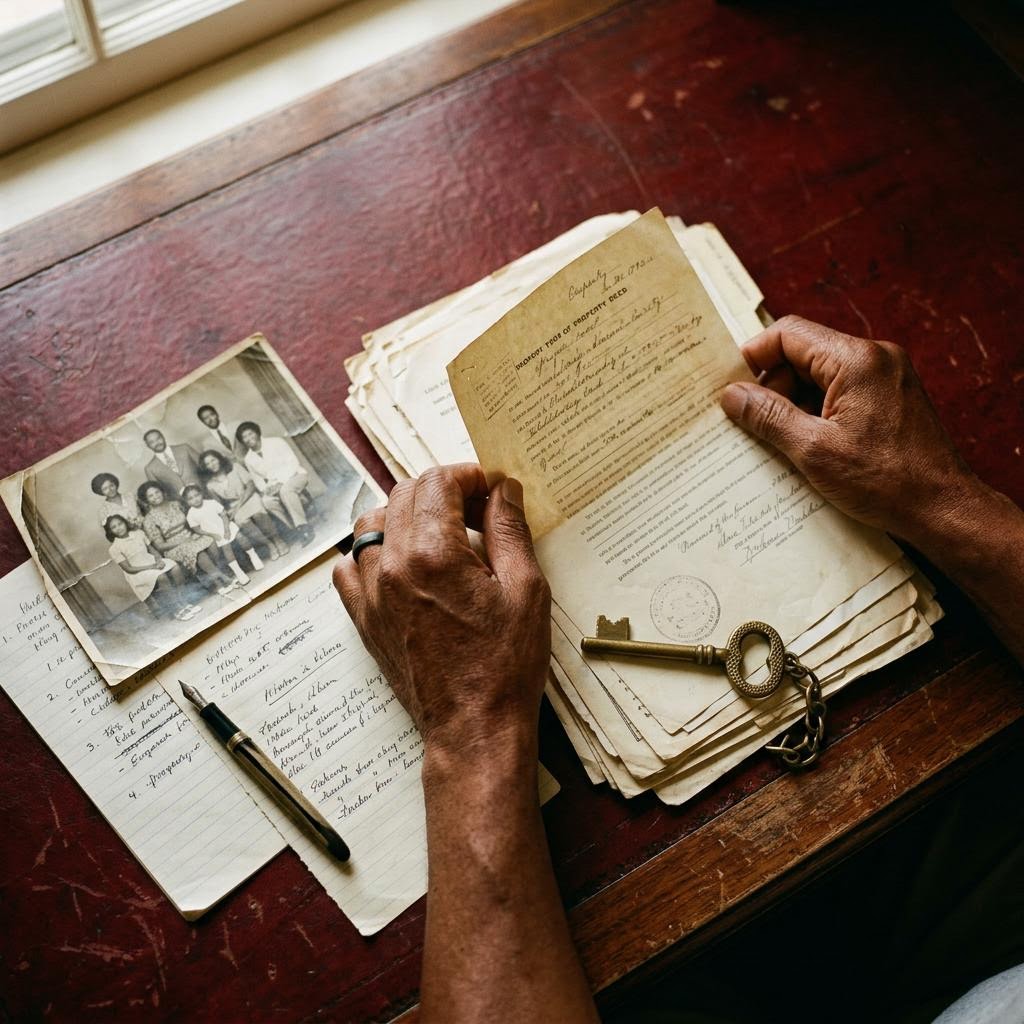 Illustrative AI image
01
Understand the exchange
Products and services both belong in a barter arrangement. You might exchange goods for goods, services for services, or a product for a service. Some agreements combine a trade with a cash payment.
Bartering is different from a gift or volunteering: each side agrees to provide something in return. It is also not an investment promising a financial return. A useful trade meets a need both parties actually have.
Fictional example: a photographer and a bookkeeper agree to exchange a defined photo session and a defined bookkeeping service, each normally priced at $200. Both record the agreed work, its supported value, and when it is completed.
02
Agree on a fair value
Compare what the goods or services would ordinarily sell for, not an inflated price invented for the trade. Fair market value generally reflects what a willing buyer and seller would agree on under ordinary conditions.
Time alone does not determine value. Materials, skill, condition, quality, and scope can differ. Neither party should feel pressured to accept a trade or give away work they need to be paid for.
- Use ordinary prices, quotes, or comparable sales to support the value.
- Describe the exact goods or service, including quantity, condition, and what is excluded.
- If the values differ, agree on a smaller scope, an additional item, or a cash difference—or decline.
03
Put the agreement in writing
A short written record helps prevent two different ideas of the same deal. Keep a copy with both parties’ agreement before either side begins.
- Identify who is exchanging what, the agreed values, and any cash payment.
- Set delivery dates, the work location, and how completion will be accepted.
- Clarify materials, expenses, revisions, and any permissions or usage rights for creative work.
- Agree on what happens if the work is late, incomplete, or cancelled, and how a dispute will be handled.
These are planning points, not a legal contract template. For a valuable, complex, or regulated exchange, get qualified legal guidance.
04
Keep records and plan for taxes
An exchange without cash is not automatically tax-free. In the United States, the IRS says the fair market value of goods or services received through bartering must be included in gross income in the year received. The reporting and any deductions depend on your circumstances.
Keep the agreement, dates, descriptions, evidence of value, receipts, and records of any cash portion. You may still need cash for taxes, materials, and other expenses. Estimated tax payments may apply.
An organized barter exchange generally has Form 1099-B reporting duties unless an exception applies. Direct service trades outside a barter exchange do not require Form 1099-B, but other information-return requirements may apply. Not receiving a form does not automatically remove an income-reporting obligation.
Check the current IRS guidance and ask a qualified tax professional how your specific exchange should be recorded and reported. Rules outside the United States differ.
05
Know when cash is the better choice
Do not trade for something you do not need just to complete a deal. Barter will not necessarily pay rent, payroll, suppliers, or tax bills, and it can tie up time needed for paying customers.
Bartering does not remove licensing, safety, insurance, or professional responsibilities. Check any applicable ethical or contractual restrictions before offering regulated services. Walk away from pressure, unclear promises, or a request to conceal the exchange.
- Verify the other party, the goods, and any relevant qualifications before committing.
- Protect sensitive information and keep your records offline; Blackonomics does not arrange trades or collect exchange details.
- Choose a manageable first exchange and review whether it genuinely benefits both sides.
Official sources
Official U.S. guidance on fair market value, reporting barter income, estimated taxes, and the distinction between direct trades and organized barter exchanges.
External sites have their own policies and may change. Confirm current requirements with the agency or a qualified professional. Also see the state filing directory.